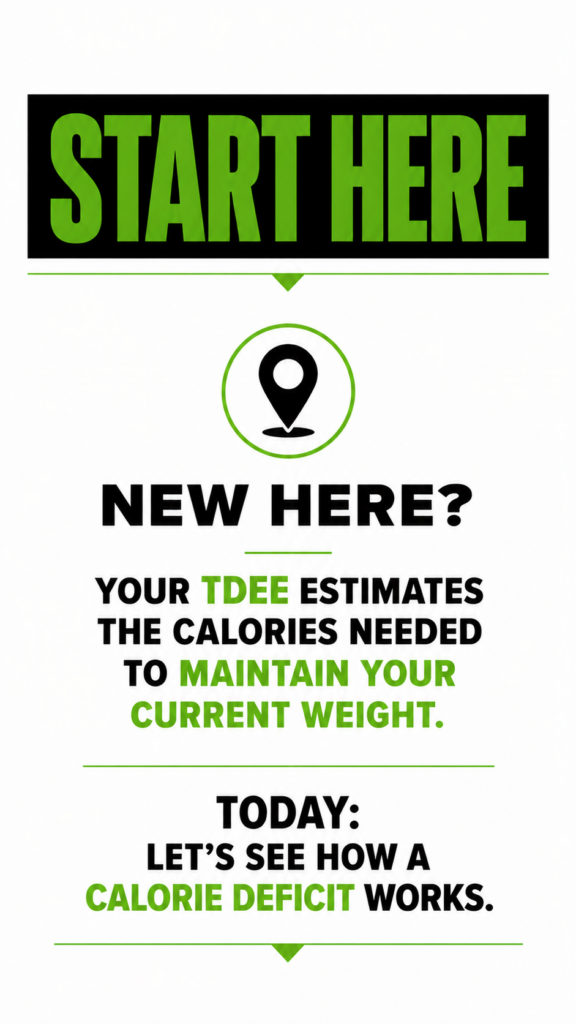
How does a calorie deficit work? If your goal is to lose fat, you’ve probably heard the phrase, but understanding how a calorie deficit works is one of the most important steps toward building a sustainable nutrition plan.
A calorie deficit happens when you consistently eat fewer calories than your Total Daily Energy Expenditure (TDEE). When this happens, your body uses stored energy to help make up the difference.
Understanding how a calorie deficit works is one of the most important steps toward building a sustainable nutrition plan.
See the Video Here
What Is a Calorie Deficit?
A calorie deficit occurs when you consume fewer calories than your body uses each day.
Your TDEE estimates the calories needed to maintain your current weight.
When you eat below your TDEE, your body must find another source of energy to help meet its daily needs.
Your TDEE Is Your Starting Point
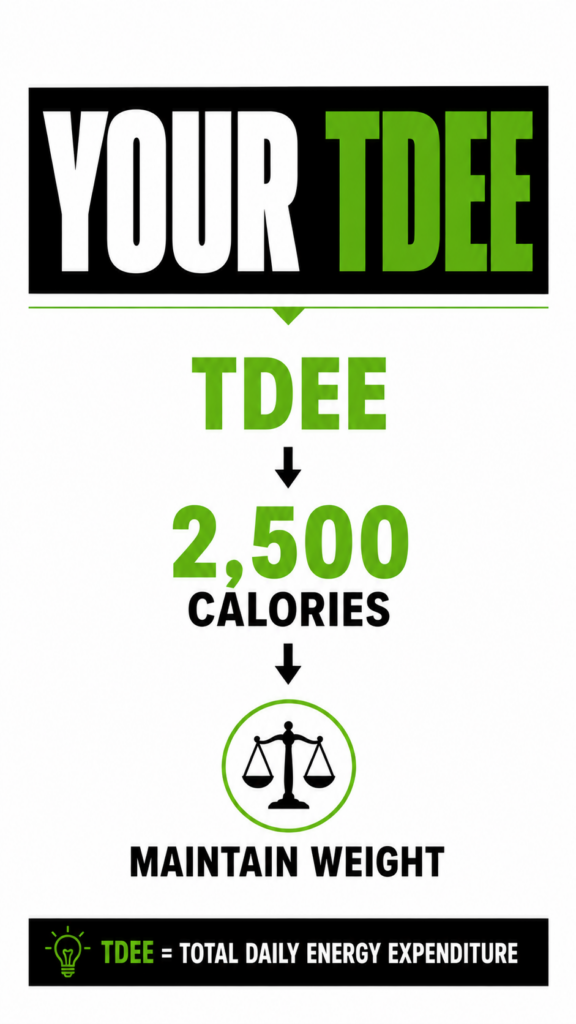
Think of your TDEE as your maintenance calories.
For example:
TDEE
↓
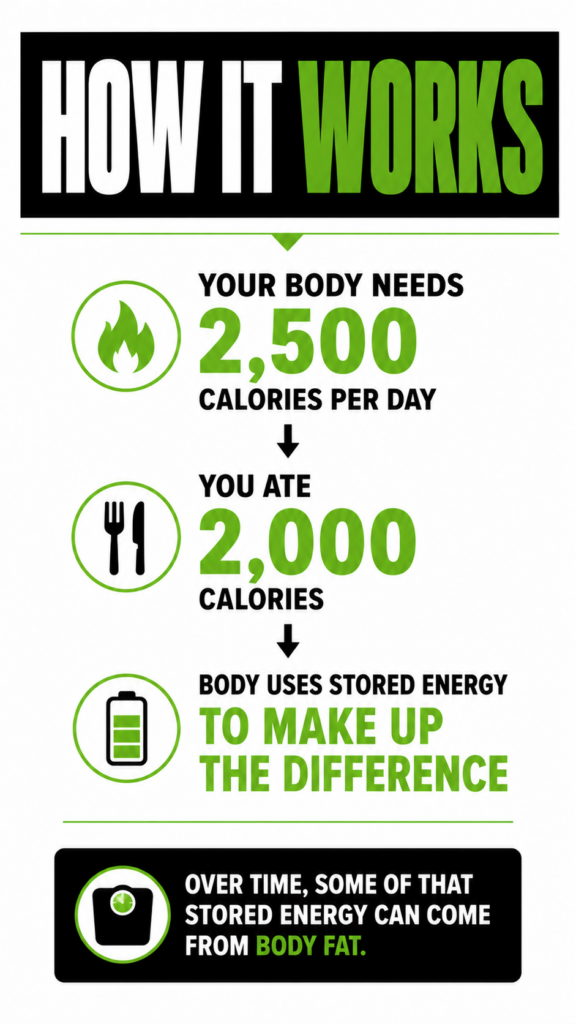
2,500 Calories
↓
Maintain Weight
Eating around your TDEE generally helps maintain your current body weight.
Creating a Calorie Deficit
Now imagine you eat fewer calories than your TDEE.
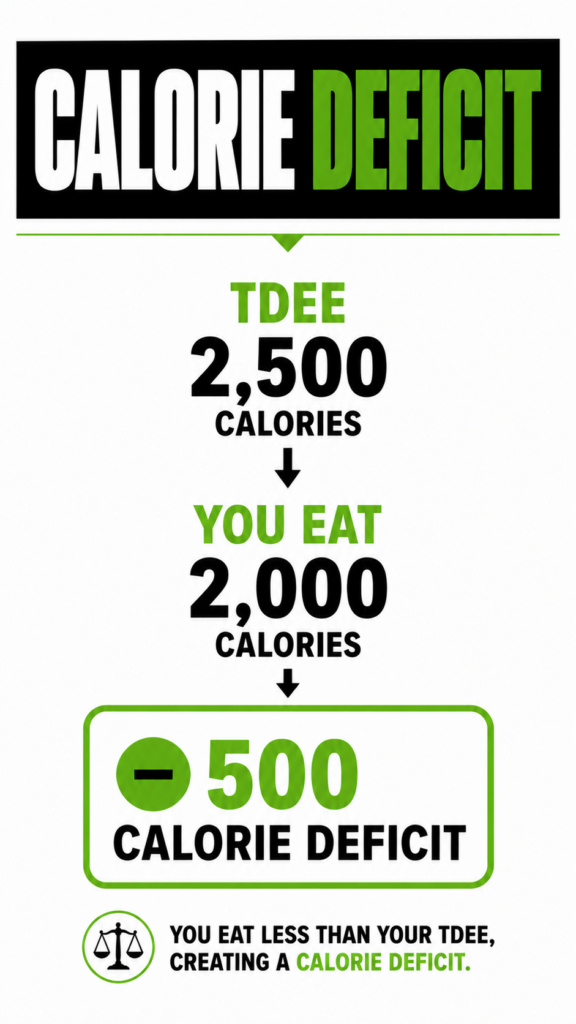
Example:
TDEE
2,500 Calories
↓
You Eat
2,000 Calories
↓
500-Calorie Deficit
This difference between the calories your body needs and the calories you consume is called a calorie deficit.
How Does a Calorie Deficit Work?
Your body still requires energy to support daily activities like breathing, circulation, digestion, movement, and countless other biological processes.
If you eat fewer calories than your TDEE, your body helps make up the difference by using stored energy.
Over time, when combined with a balanced nutrition plan, some of that stored energy can come from body fat.
Why Many People Start Around a 500-Calorie Deficit
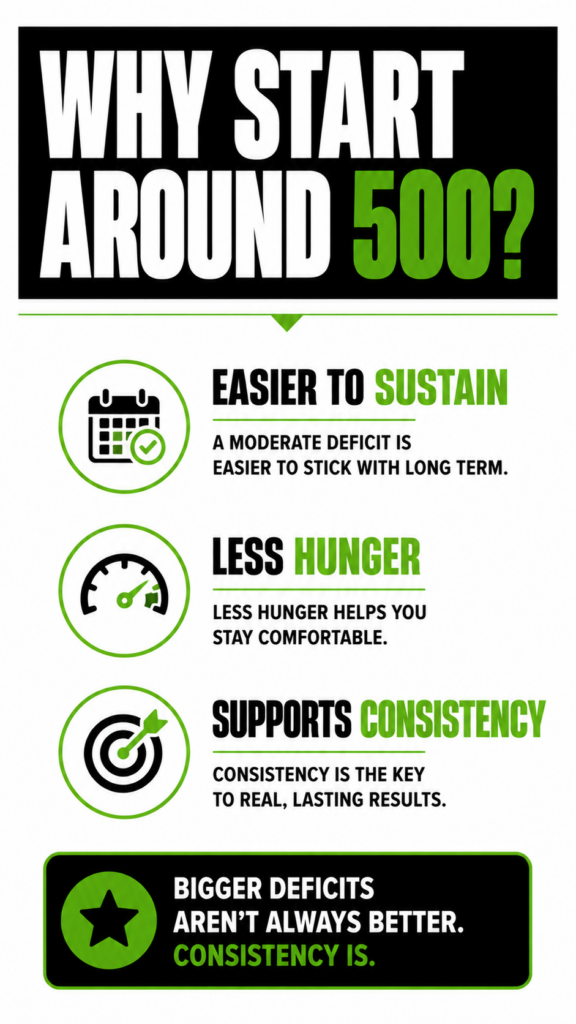
A moderate calorie deficit is often recommended because it’s generally easier to maintain than making extreme calorie cuts.
Rather than trying to lose weight as quickly as possible, a sustainable approach is often more practical and easier to stick with over time.
Consistency usually matters more than making aggressive calorie reductions.
What Does a 500-Calorie Deficit Look Like?
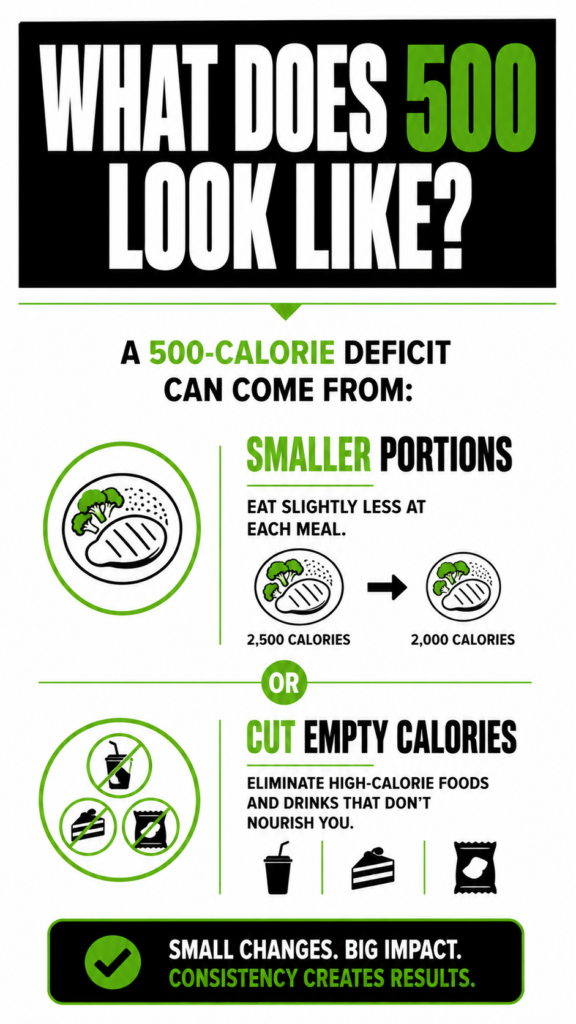
A 500-calorie deficit doesn’t have to mean skipping meals.
It might involve:
- Eating slightly smaller portions.
- Replacing sugary drinks with water.
- Reducing foods that provide calories without much nutritional value.
- Making several small changes throughout the day.
Small adjustments are often easier to maintain than one major change.
Keep It Sustainable
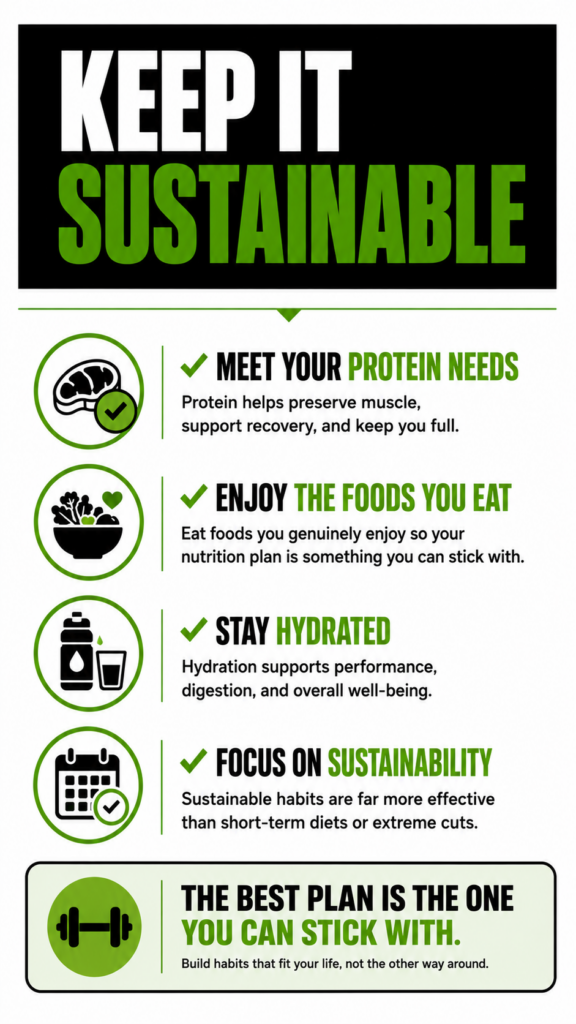
Successful fat loss isn’t about eating as little as possible.
Instead, focus on building habits you can maintain over time.
Some helpful principles include:
- Meet your daily protein needs.
- Stay hydrated.
- Enjoy foods you like in moderation.
- Avoid extreme calorie cuts.
A nutrition plan that fits your lifestyle is generally easier to maintain long term.
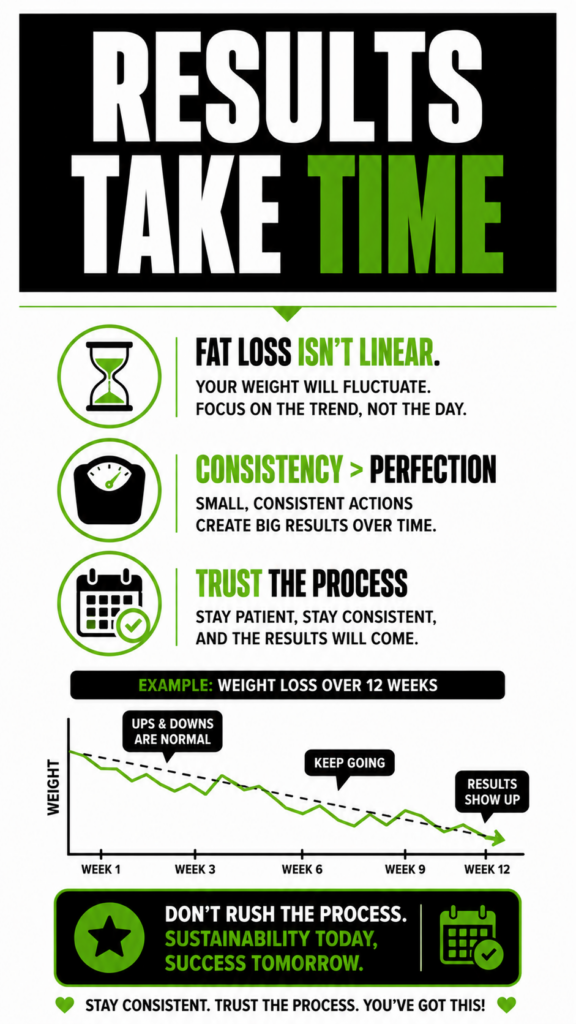
Results Take Time
Results vary from person to person.
Fat loss is rarely perfectly linear, and it’s normal for body weight to fluctuate from day to day due to hydration, food intake, and other factors.
Research has shown that meaningful changes in body composition often become more noticeable after several weeks of consistent nutrition and lifestyle habits rather than after only a few days.
Instead of focusing on daily fluctuations, pay attention to your long-term progress.
Patience and consistency are the foundation of sustainable fat loss.
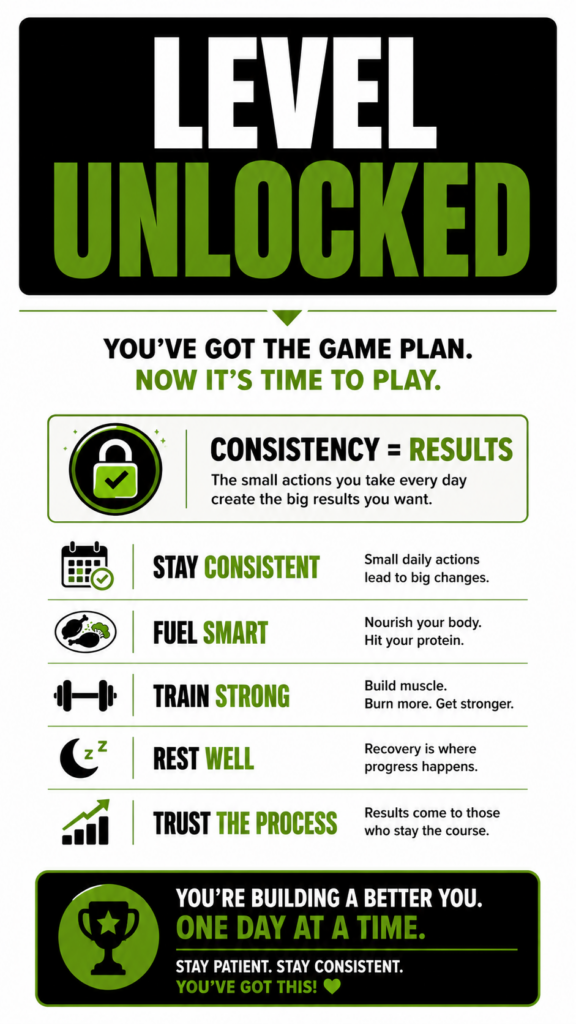
Level Unlocked
Congratulations!
You now understand:
✅ What a calorie deficit is.
✅ How a calorie deficit works.
✅ Why many people begin with a moderate calorie deficit.
✅ How to approach fat loss sustainably.
No more guessing.
Frequently Asked Questions
A calorie deficit occurs when you consistently consume fewer calories than your Total Daily Energy Expenditure (TDEE).
Does a Calorie Deficit Automatically Burn Body Fat?
A moderate calorie deficit is often easier to maintain than making extreme calorie cuts while still supporting gradual fat loss.
A larger calorie deficit isn’t always better. More aggressive calorie cuts can be harder to maintain and may increase hunger and fatigue. A sustainable approach is often more effective over the long term.
Results vary between individuals. Factors such as starting body weight, activity level, nutrition, sleep, and consistency all influence progress. Focus on long-term trends rather than day-to-day changes.
A calorie deficit works by consistently eating fewer calories than your Total Daily Energy Expenditure (TDEE). Over time, your body helps make up the energy difference by using stored energy.
Sources
Hall KD, Guo J. Obesity Energetics: Body Weight Regulation and the Effects of Diet Composition. Gastroenterology. 2017.
Academy of Nutrition and Dietetics.
National Institutes of Health.
Centers for Disease Control and Prevention (CDC).
Continue Leveling Up
You’ve learned how a calorie deficit works and why it begins with knowing your TDEE.
Next, learn How Does a Calorie Surplus Work? to understand how eating above your TDEE can support muscle gain and weight gain goals.