
If your goal is to build muscle or gain weight, you’ve probably heard that you need a calorie surplus. But how does a calorie surplus work?
A calorie surplus happens when you consistently eat more calories than your Total Daily Energy Expenditure (TDEE). Understanding how a calorie surplus works is an important step toward building a nutrition plan that supports your goals.
In this guide, we’ll use a simple example to explain how a calorie surplus works and why consistency matters more than simply eating as much as possible.
Watch the video here
What Is Your TDEE?
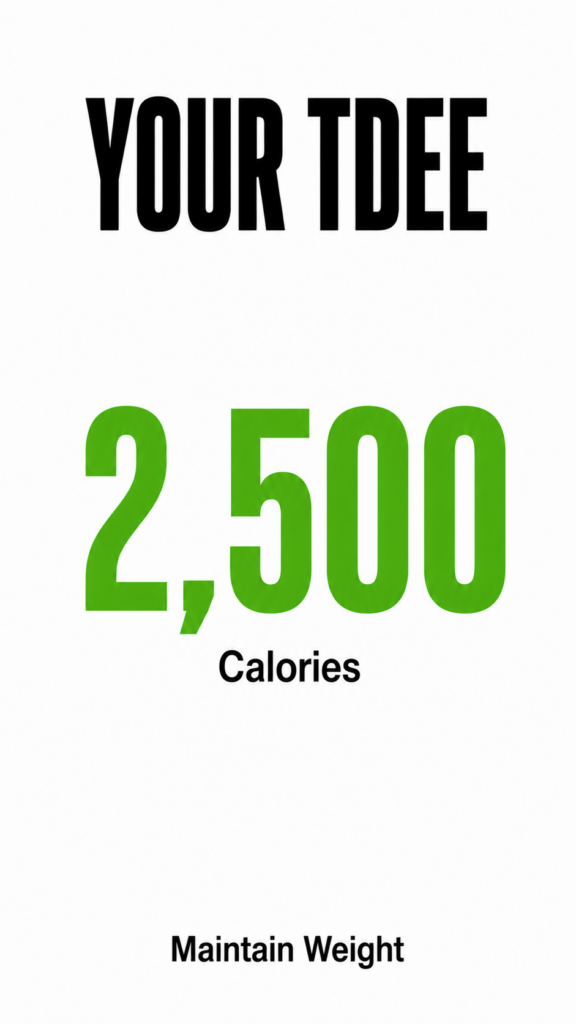
Your Total Daily Energy Expenditure (TDEE) estimates how many calories your body burns each day.
Think of it as your maintenance calories.
For example, if your TDEE is 2,500 calories, eating around that amount each day generally helps maintain your current weight.
Creating a Calorie Surplus
Now imagine you eat 3,000 calories each day.
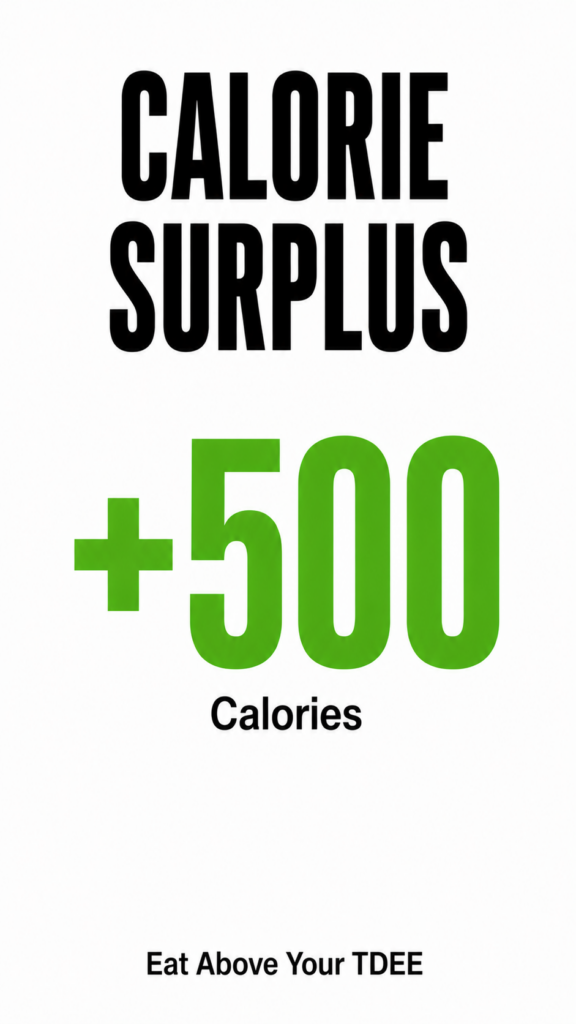
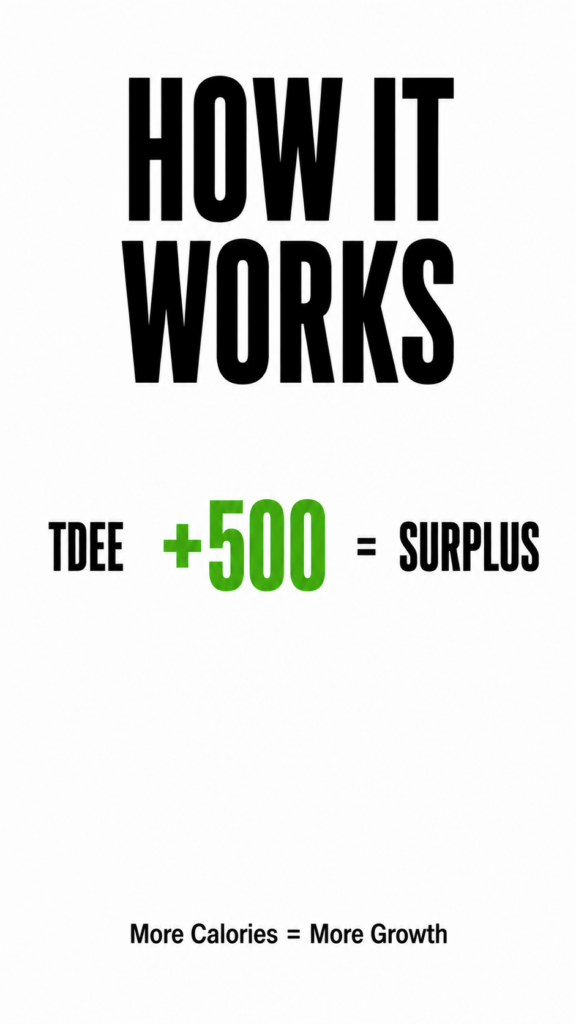
That’s about 500 calories above your TDEE, creating a calorie surplus.
Example:
TDEE
2,500 Calories
↓
You Eat
3,000 Calories
↓
500-Calorie Surplus
How Does a Calorie Surplus Work?
When you consistently eat above your TDEE, your body has additional energy available beyond what it needs for daily activities.
Combined with regular resistance training and adequate protein intake, this additional energy helps create an environment that supports muscle growth.
Simply eating more food isn’t enough. A calorie surplus works best when paired with a structured strength-training program and a balanced nutrition plan.
Why Start Around 500 Calories?
For beginners, using an example of about 500 calories above your TDEE is an easy way to understand what a calorie surplus looks like.
It provides a simple starting point for learning how to adjust your calorie intake while monitoring your progress over time.
As you gain experience, your nutrition plan can be adjusted to better match your individual goals.
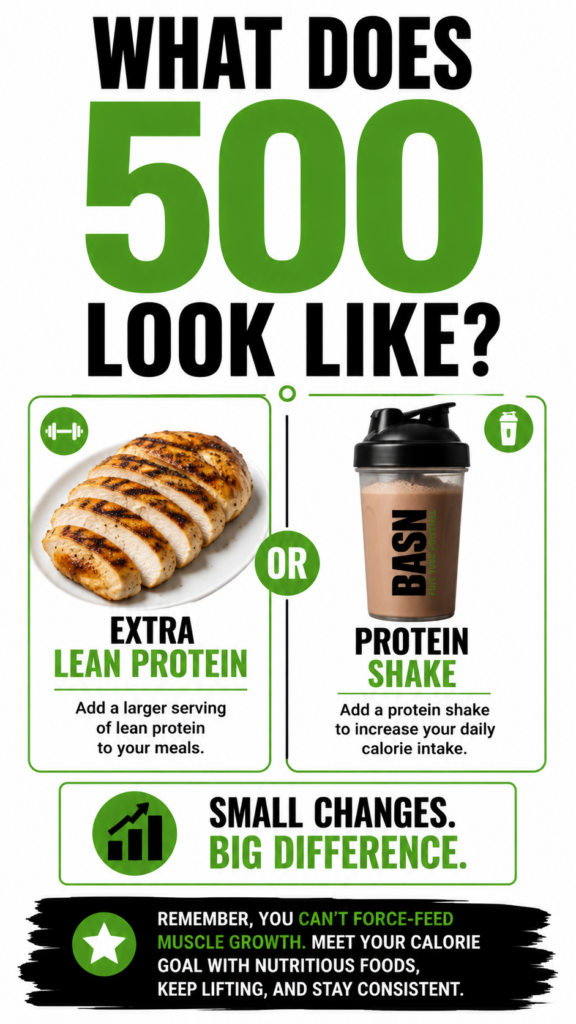
What Does 500 Extra Calories Look Like?
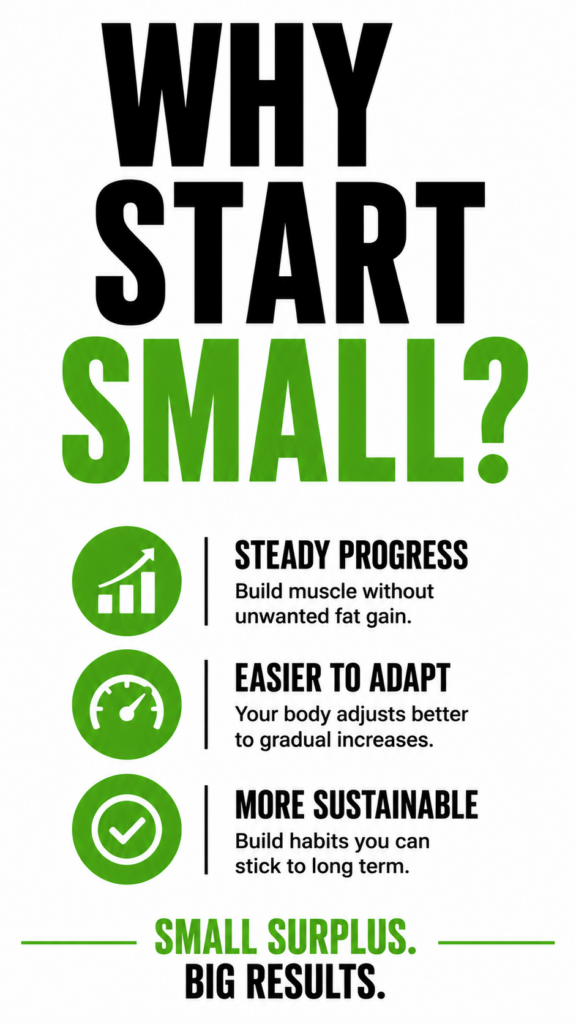
A calorie surplus doesn’t have to mean overeating.
It could be as simple as:
- Adding extra lean protein to your meals.
- Drinking a protein shake between meals.
- Making small increases to your daily calorie intake.
Small, consistent changes are often easier to maintain than dramatically increasing your food intake.
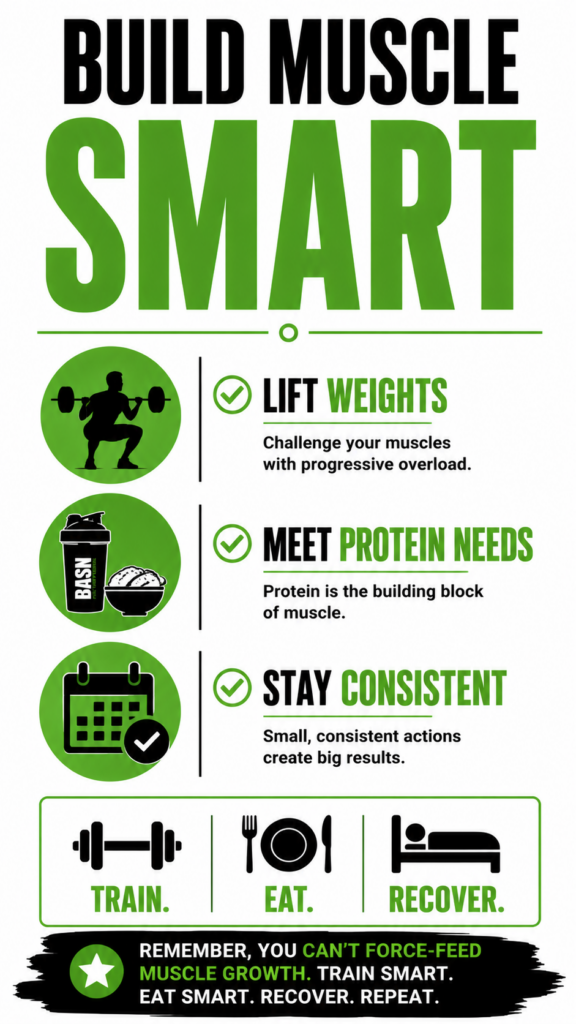
Build Muscle Smart
Remember:
You can’t force-feed muscle growth.
A calorie surplus supports muscle growth, but it works best when combined with:
- Regular resistance training
- Meeting your daily protein requirements
- Consistency over time
Nutrition and training work together to help support your goals.
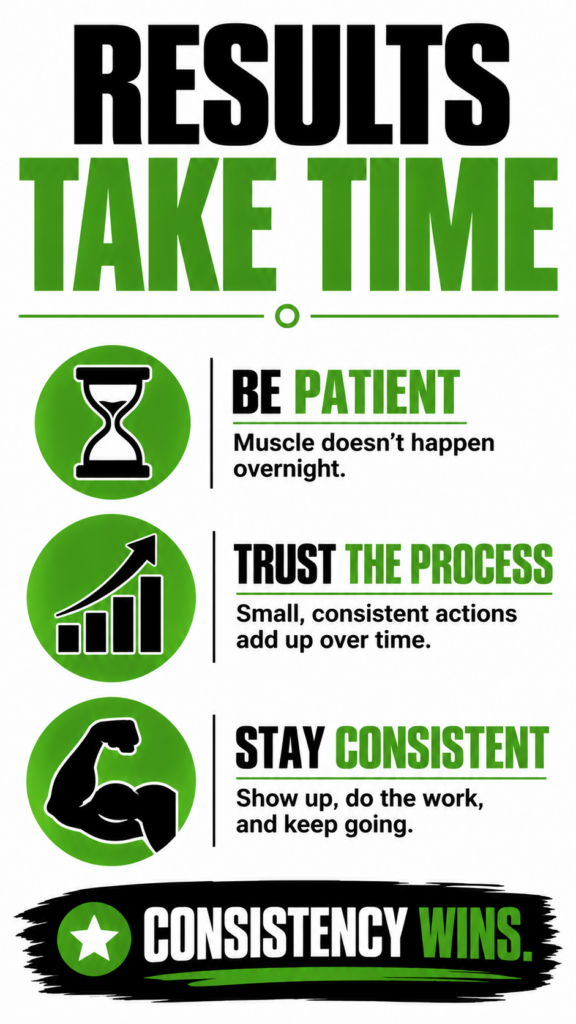
Results Take Time
Building muscle takes patience.
Results vary from person to person based on factors such as training experience, nutrition, sleep, recovery, and consistency.
Rather than expecting rapid changes, focus on building habits you can maintain for months—not just weeks.
Consistency is what leads to long-term progress.
Level Unlocked
Congratulations!
You now understand:
✅ How a calorie surplus works.
✅ Why TDEE is your starting point.
✅ Why a 500-calorie surplus is a useful learning example.
✅ How to support muscle growth with smart nutrition.
No more guessing.
Frequently Asked Questions
A calorie surplus works by consistently eating more calories than your Total Daily Energy Expenditure (TDEE). Combined with resistance training and adequate protein intake, this creates an environment that supports muscle growth.
A calorie surplus is commonly used to support muscle growth because it provides additional energy beyond your body’s daily maintenance needs.
No. A calorie surplus alone doesn’t build muscle. Regular resistance training and adequate protein intake are also important.
A 500-calorie surplus is used as a simple educational example to help beginners understand the concept of eating above their TDEE.
Results vary between individuals. Factors such as training, nutrition, sleep, genetics, and consistency all influence progress. Focus on long-term habits rather than short-term expectations.