If you’ve ever wondered what lean bulking is, you’re not alone. Lean bulking is a nutrition and training strategy designed to help build muscle while helping limit unnecessary fat gain.
Instead of eating as much food as possible, a lean bulk uses a controlled calorie surplus, consistent strength training, and nutritious food choices to support gradual muscle growth.
For beginners, it’s often one of the most sustainable ways to increase muscle mass without the rapid weight gain that can come from a traditional bulk.
Watch the short video here
START HERE
Before worrying about meal plans or supplements, it’s important to understand what lean bulking actually is.
Lean bulking isn’t about eating everything in sight. It’s a structured approach that combines nutrition and resistance training to help your body build muscle while helping reduce unnecessary fat gain.
What Is a Lean Bulk?
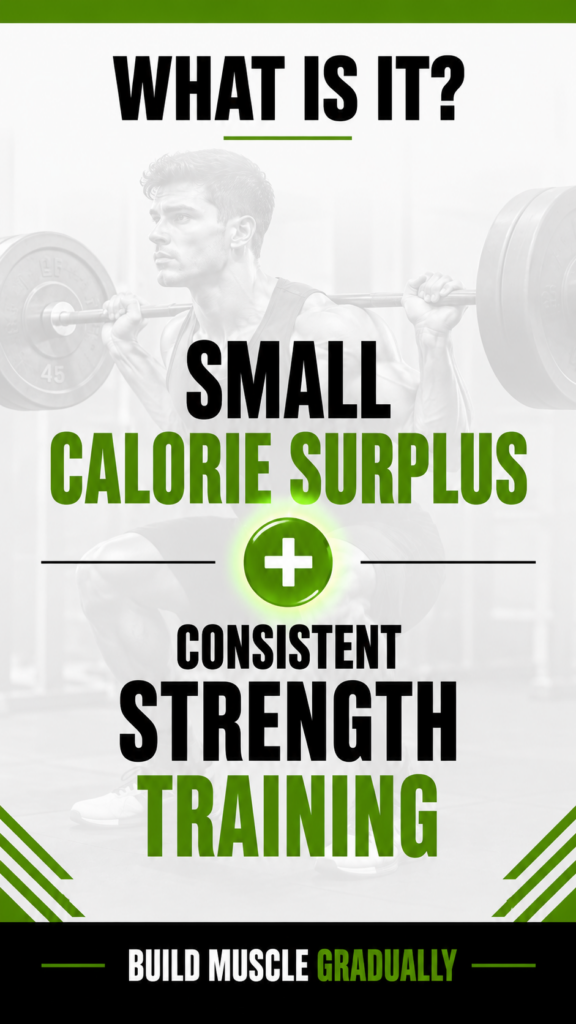
A lean bulk is the practice of eating slightly more calories than your body burns each day while following a consistent strength-training program.
Those extra calories provide your body with additional energy to support muscle growth and recovery after training.
Unlike a traditional bulk, the goal isn’t simply to gain weight.
The goal is to create an environment where muscle growth is prioritized while helping keep fat gain under control.
Why Lean Bulk?
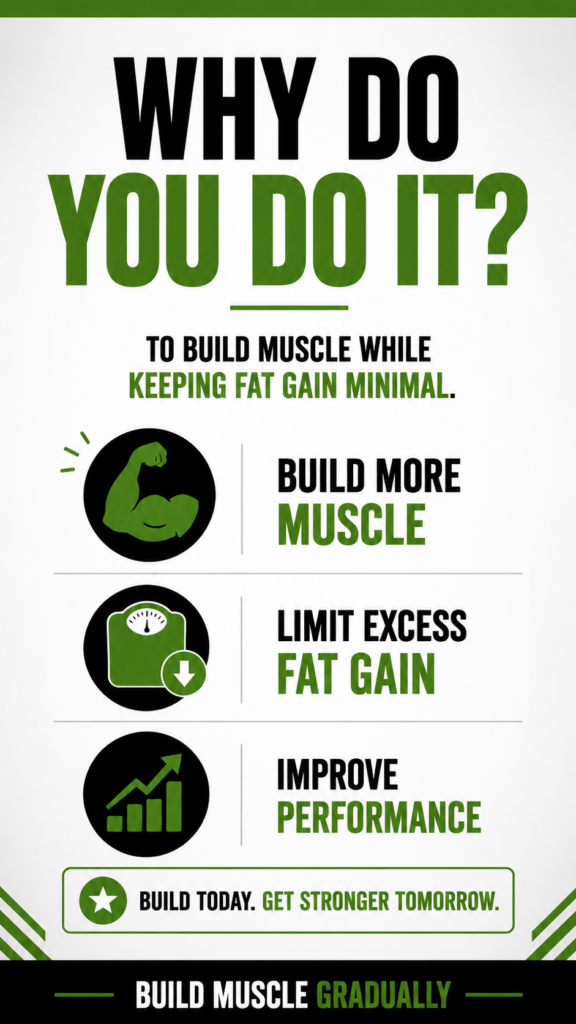
People choose a lean bulk because it focuses on long-term progress rather than rapid weight gain.
A properly planned lean bulk can help you:
- Build more muscle over time
- Help limit unnecessary body fat
- Improve strength and training performance
Rather than spending months gaining excessive weight and later dieting it off, a lean bulk aims for slower, more controlled progress that is easier to maintain.
How Do You Do It?
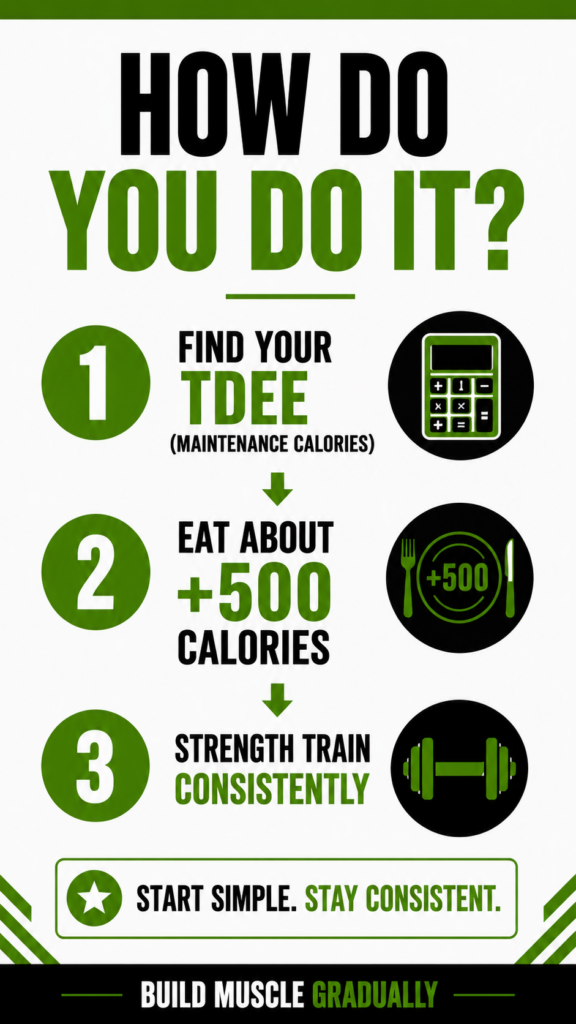
Lean bulking follows three simple steps.
1. Find Your TDEE
Your Total Daily Energy Expenditure (TDEE) estimates how many calories your body burns in a typical day.
Knowing your maintenance calories gives you a starting point for determining how much food to eat.
2. Eat in a Small Calorie Surplus
Instead of dramatically increasing calories, many people begin with approximately 500 calories above maintenance.
This provides your body with additional energy that can support muscle growth while helping avoid excessive fat gain.
Keep in mind this is simply a common starting point—not a one-size-fits-all recommendation. Your ideal calorie surplus may vary depending on your activity level, body size, training experience, and rate of progress.
3. Strength Train Consistently
Extra calories alone won’t build muscle.
Your workouts provide the stimulus your muscles need to grow. Progressive overload, good technique, and consistency remain the foundation of a successful lean bulk.
Understanding a Controlled Calorie Surplus
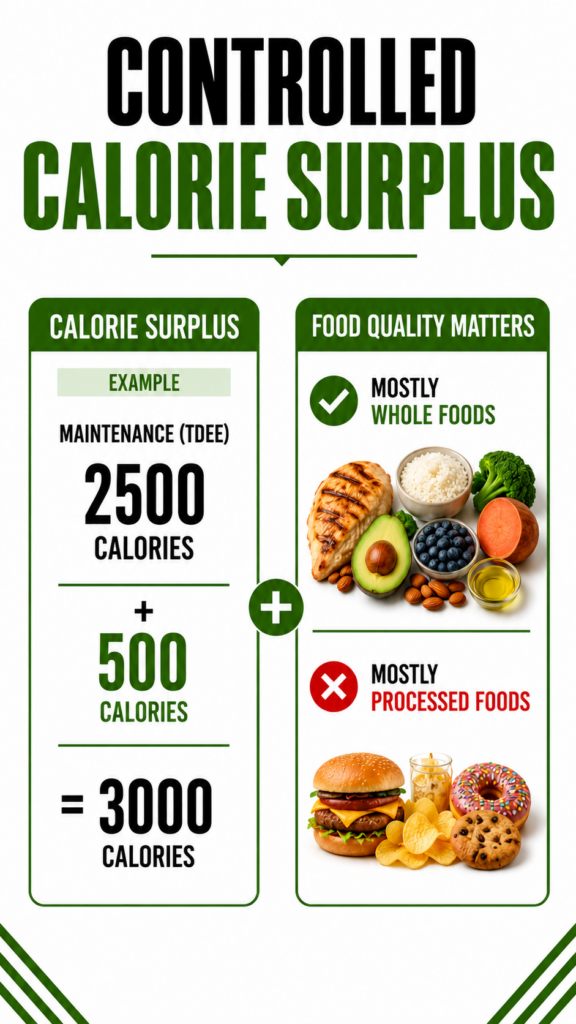
A lean bulk is essentially a controlled calorie surplus paired with smart food choices.
For example:
- Maintenance Calories (TDEE): 2,500 calories
- Lean Bulk Target: 3,000 calories
- Daily Surplus: +500 calories
However, those additional calories shouldn’t come primarily from highly processed foods.
Whenever possible, choose mostly whole, nutrient-dense foods that provide protein, carbohydrates, healthy fats, vitamins, and minerals.
Food quality supports better training performance, recovery, overall health, and makes it easier to stay consistent over time.
What Should You Eat During a Lean Bulk?
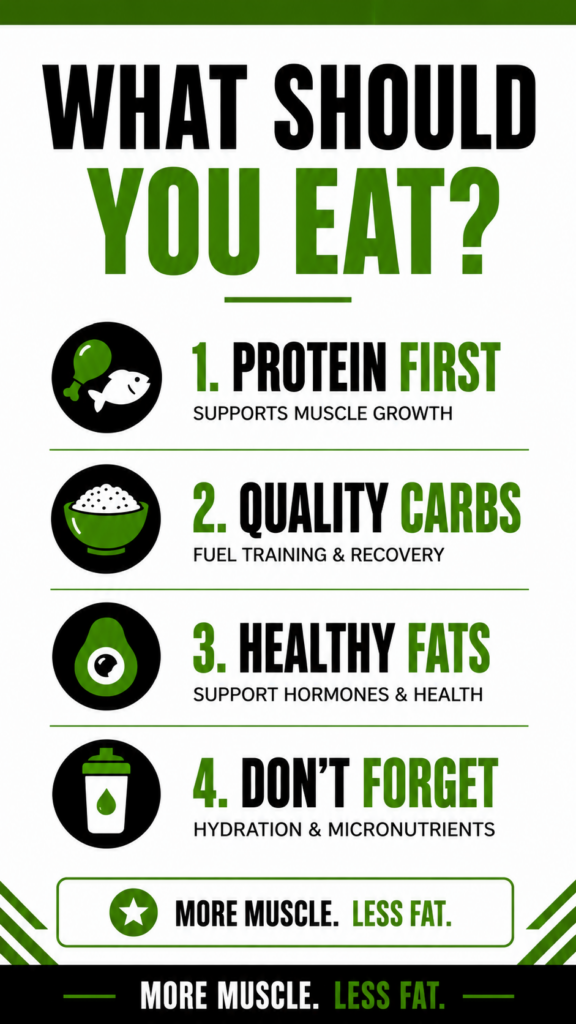
You don’t need expensive meal plans or specialty products.
Successful lean bulks are often built around simple grocery-store foods.
Aim to prioritize:
- High-quality protein to support muscle growth
- Carbohydrates to fuel training and recovery
- Healthy fats to support hormone production and overall health
- Fruits, vegetables, and plenty of fluids to provide vitamins, minerals, and hydration
The goal isn’t perfection—it’s consistency.
Build Your Plate
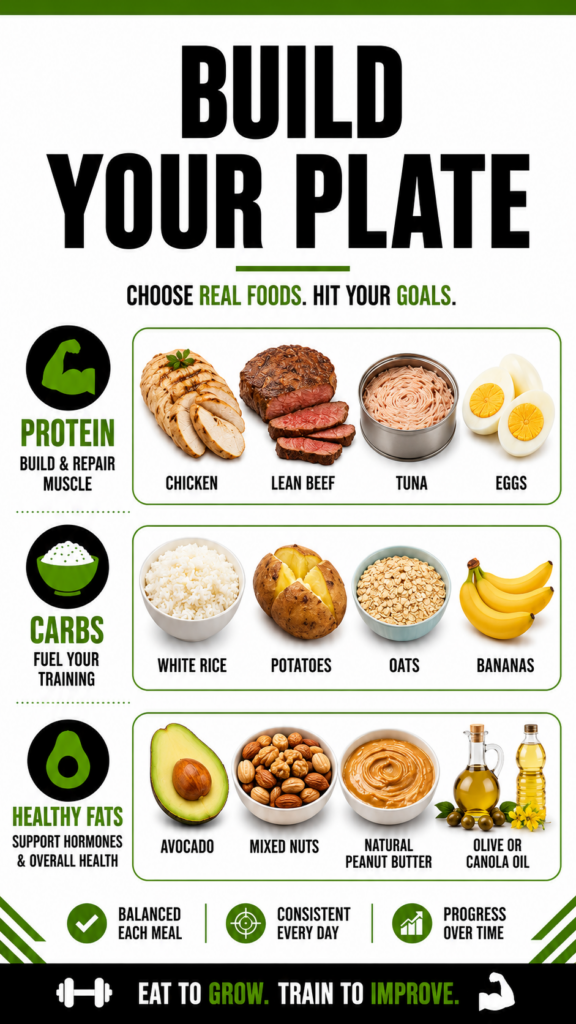
A balanced plate makes hitting your nutrition goals much easier.
Protein
- Chicken
- Lean beef
- Tuna
- Eggs
Protein supplies the amino acids your muscles use to repair and grow.
Carbohydrates
- White rice
- Potatoes
- Oats
- Bananas
Carbohydrates replenish glycogen stores and provide energy for your workouts.
Healthy Fats
- Avocado
- Mixed nuts
- Natural peanut butter
- Olive or canola oil
Healthy fats support hormone production while also making meals more satisfying.
Rather than trying to create the perfect meal, build balanced meals from foods you enjoy eating consistently.
Common Lean Bulking Mistake
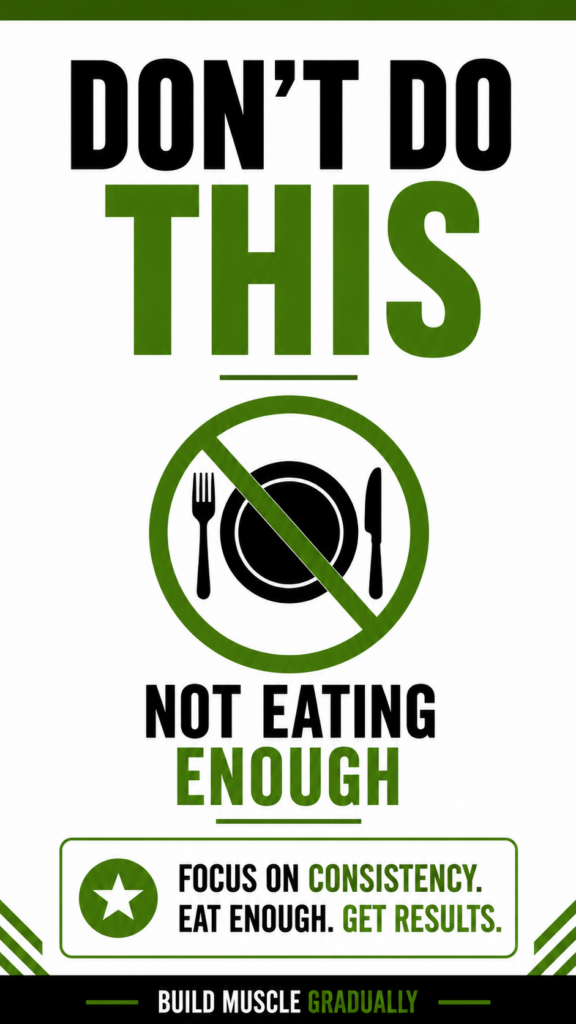
One of the biggest mistakes during a lean bulk is not eating enough consistently.
Many people train hard but regularly fall short of their calorie target.
Without enough energy available, your body has less support for muscle growth and recovery.
Missing your calorie goal occasionally isn’t a problem.
However, consistently undereating can slow your progress.
Aim to meet both your calorie and protein goals most days while continuing to train regularly.
How Do You Know It’s Working?
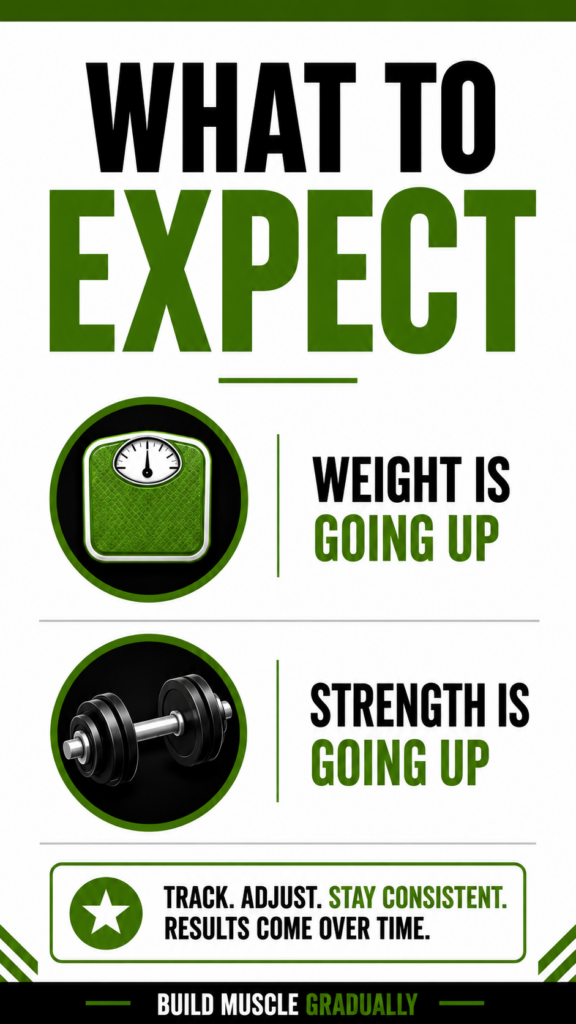
Muscle growth takes time.
Instead of looking for dramatic overnight changes, monitor gradual progress over several weeks.
Positive signs include:
- Gradual increases in body weight
- Increasing strength during workouts
- Improved training performance
Tracking your body weight, workout performance, and progress photos can help determine whether your current calorie intake is supporting your goal.
If progress stalls for several weeks, you may need to slightly increase calories or evaluate your training program.
Lean Bulk vs. Traditional Bulk
| Lean Bulk | Traditional Bulk |
|---|---|
| Controlled calorie surplus | Larger calorie surplus |
| Slower, gradual weight gain | Faster weight gain |
| Focus on muscle while helping limit fat gain | Greater potential for muscle and fat gain |
| Emphasizes nutrient-dense foods | Food quality often varies more |
Neither approach is inherently better.
The right choice depends on your goals, preferences, and how comfortable you are managing body composition over time.
Final Thoughts
Understanding what lean bulking is is the first step toward building muscle in a more controlled and sustainable way.
By learning your TDEE, creating a controlled calorie surplus, strength training consistently, and choosing mostly nutrient-dense foods, you can support muscle growth while helping limit unnecessary fat gain.
Remember, successful lean bulking isn’t about eating as much as possible—it’s about giving your body the energy and nutrients it needs to grow while staying consistent with your training.
Small, smart choices repeated over time often produce the best long-term results.
LEVEL UNLOCKED
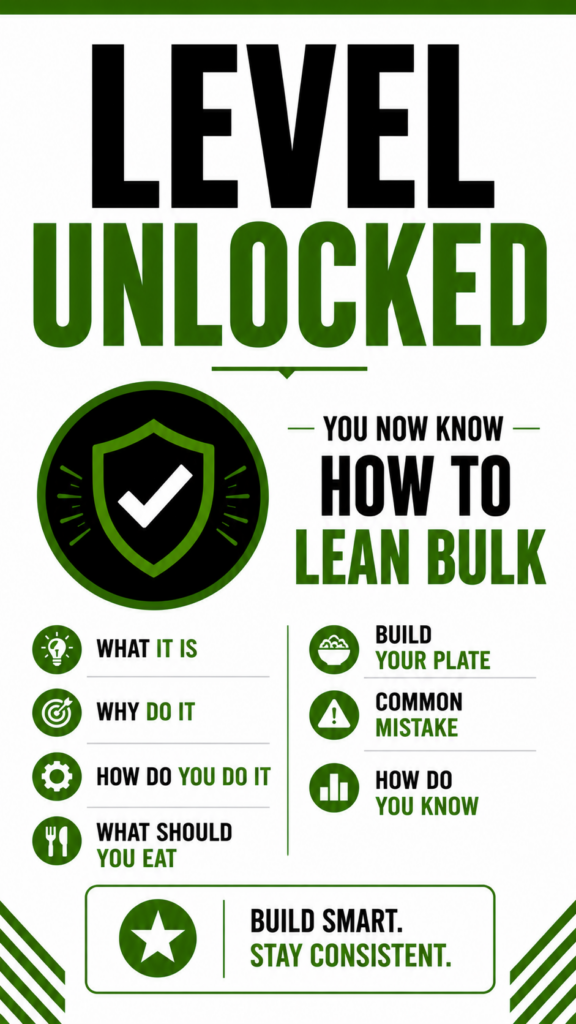
You now understand:
- What lean bulking is
- Why people use it
- How to calculate a lean bulk
- Why food quality matters
- What foods to prioritize
- The most common mistake to avoid
- How to measure your progress
Now it’s time to apply what you’ve learned.
Start with your maintenance calories, build a small calorie surplus, train consistently, and let gradual progress work in your favor.
Frequently Asked Questions
A lean bulk may appeal to people who want to build muscle while helping limit unnecessary fat gain. Others may prefer a traditional bulk depending on their goals and experience.
A surplus of about 500 calories above maintenance is a common starting point for many people, but individual calorie needs vary. Monitoring progress and making adjustments over time is important.
Focus on nutritious foods that help you meet your calorie and protein goals, including lean proteins, carbohydrates, healthy fats, fruits, vegetables, and adequate fluids.
Suggested Internal Links
- What Is BMR?
- How to Calculate Your TDEE
- How Does a Calorie Surplus Work?
- How Much Protein Should You Eat a Day?
Sources
- Jäger R, Kerksick CM, Campbell BI, et al. International Society of Sports Nutrition Position Stand: Protein and Exercise. Journal of the International Society of Sports Nutrition. 2017.
- Morton RW, Murphy KT, McKellar SR, et al. A Systematic Review, Meta-analysis and Meta-regression of Protein Supplementation on Resistance Training–Induced Gains. British Journal of Sports Medicine. 2018.
- American College of Sports Medicine. ACSM’s Guidelines for Exercise Testing and Prescription.
- Thomas DT, Erdman KA, Burke LM. Position of the Academy of Nutrition and Dietetics, Dietitians of Canada, and the American College of Sports Medicine: Nutrition and Athletic Performance. Journal of the Academy of Nutrition and Dietetics. 2016.