
How much water should you drink a day? A simple way to estimate your daily water intake is to multiply your body weight in pounds by 0.5. If you exercise or sweat heavily, add additional water to replace what you lose. This guide shows you how to calculate your daily water goal step by step.
Watch the 60-Second Guide
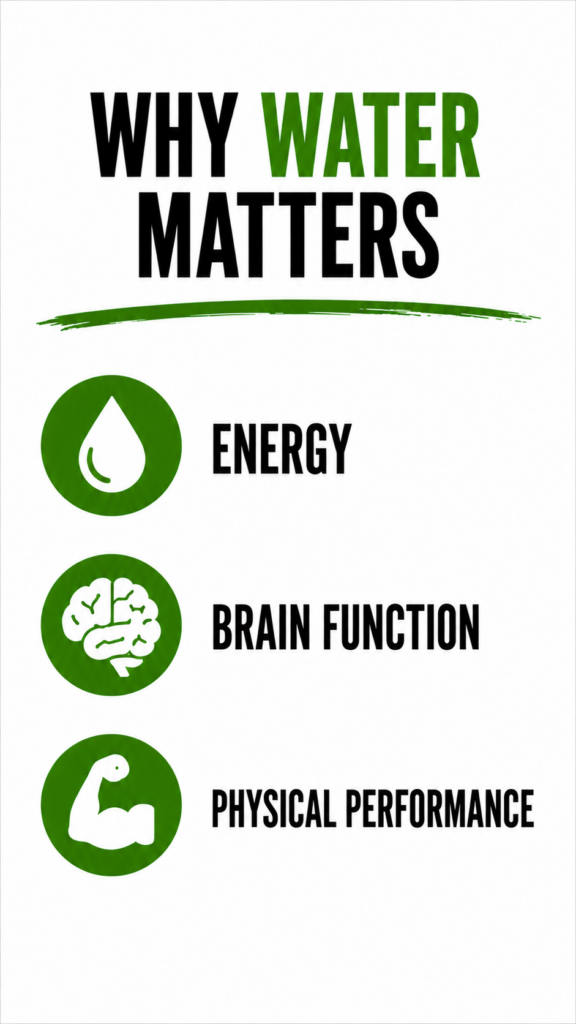
Why Water Matters
Water supports many important functions in the body. Staying hydrated can help:
- Support energy levels
- Support normal brain function
- Support physical performance
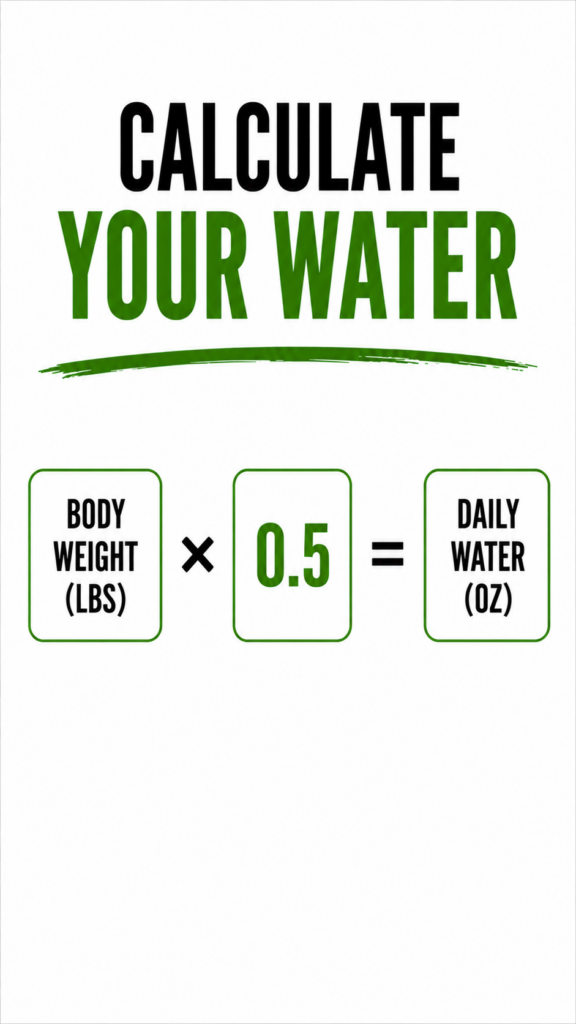
Step 1: Calculate Your Daily Water Goal
Multiply your body weight in pounds by 0.5.
Formula
Body Weight (lbs) × 0.5 = Daily Water (oz)
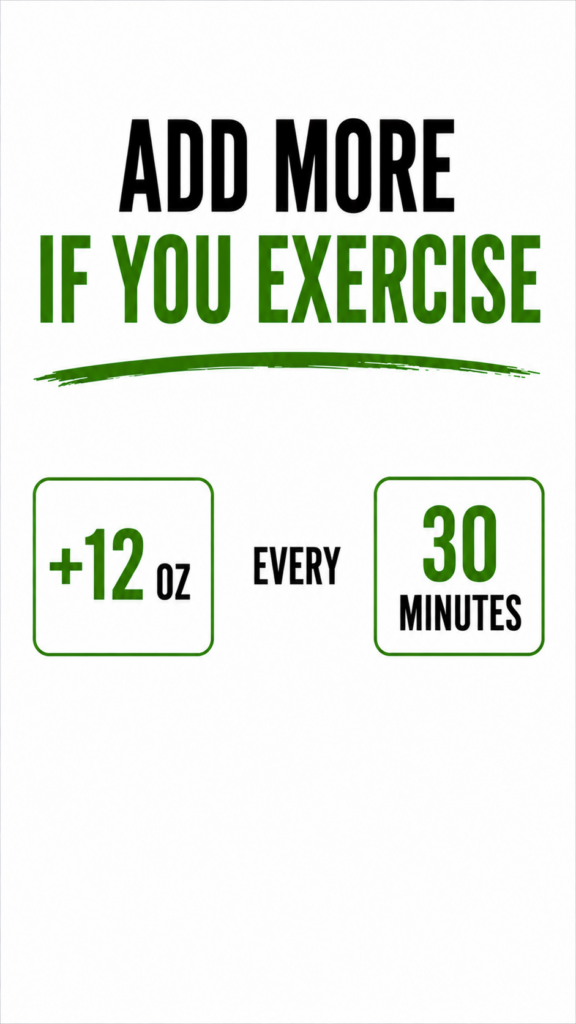
Step 2: Add Water for Exercise
If you exercise or sweat heavily, add approximately 12 ounces of water for every 30 minutes of activity.
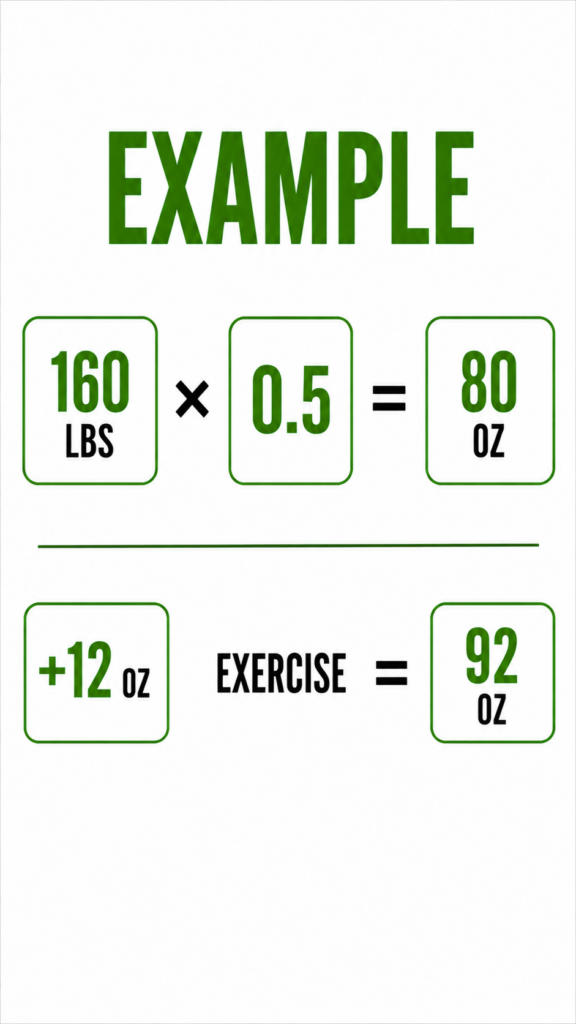
Example
Let’s use someone who weighs 160 pounds.
160 lbs
×
0.5
=
80 oz
30 minutes of exercise
12 oz
=
92 oz/day
Convert Ounces to Cups
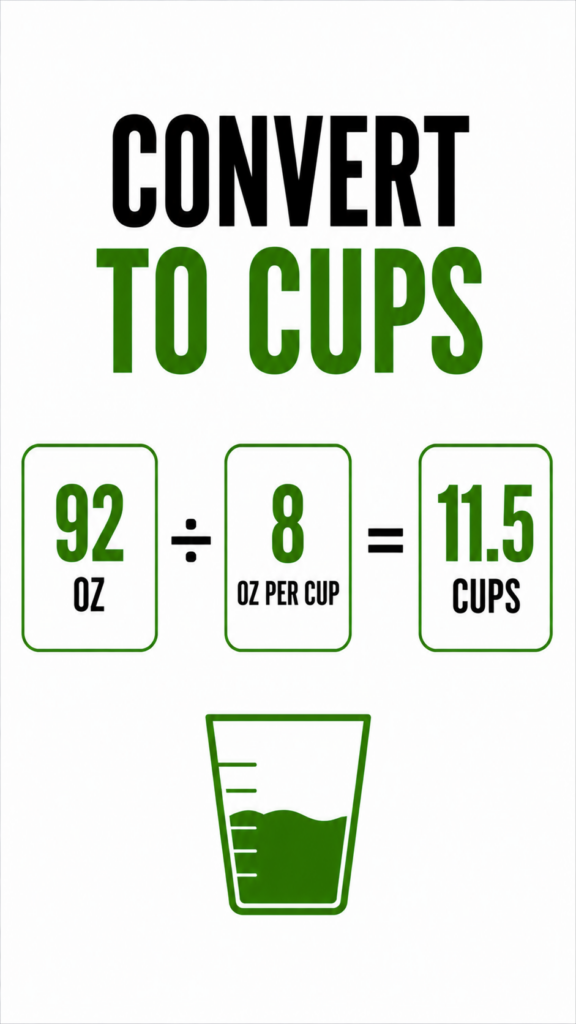
If you prefer tracking your water in cups, simply divide your daily ounces by 8.
Formula
Ounces ÷ 8 = Cups
Example:
92 oz
÷
8
≈
11½ cups
Key Takeaways
- Multiply your body weight by 0.5 to estimate your daily water intake.
- Add 12 ounces for every 30 minutes of exercise.
- Divide ounces by 8 to convert your total into cups.
Conclusion
How much water should you drink a day? A simple calculation based on your body weight provides a practical starting point. If you exercise, increase your intake to help replace fluids lost through sweat, and convert ounces to cups if that’s easier for you to track.
Frequently Asked Questions
A common starting point is to multiply your body weight in pounds by 0.5 to estimate your daily water intake in ounces.
Yes. If you sweat during exercise, adding about 12 ounces of water for every 30 minutes of activity can help replace lost fluids.
Divide your daily water goal in ounces by 8 to convert it into cups.
Coffee and tea contribute to your daily fluid intake for most healthy adults, although plain water is still an excellent choice for staying hydrated.
Yes. Drinking excessive amounts of water in a short period can be harmful. Aim for a reasonable intake based on your needs rather than forcing yourself to drink large amounts.
Sources
- National Academies of Sciences, Engineering, and Medicine. Dietary Reference Intakes for Water, Potassium, Sodium, Chloride, and Sulfate.
- Centers for Disease Control and Prevention (CDC). Healthy Hydration.
- Harvard T.H. Chan School of Public Health. The Nutrition Source: Water.
Continue Leveling Up
You just learned how to calculate your daily water needs.
Want to learn another nutrition skill?
Watch the next guide on the BASN YouTube channel or explore another Nutrition & Fitness Guidelines article.